
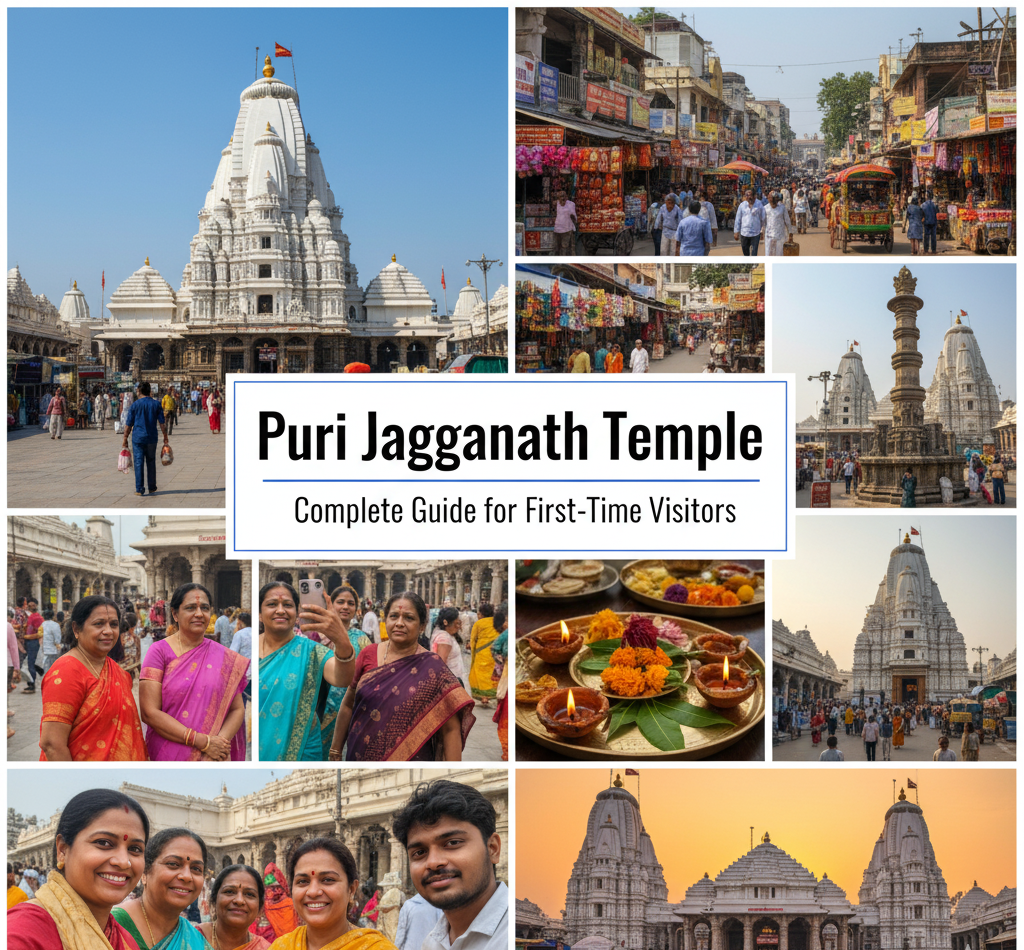

Jagannath Temple Puri is a major Hindu pilgrimage site in Odisha dedicated to Lord Jagannath, worshipped alongside his siblings Balabhadra and Subhadra. Known for its towering shikhara, daily rituals, and the annual Rath Yatra chariot festival, the temple draws large numbers of pilgrims and visitors year-round, with specific entry rules that first-time visitors should know in advance.
What Is the Jagannath Temple in Puri Known For?
The Jagannath Temple in Puri is one of India’s most significant pilgrimage sites, considered part of the Char Dham circuit alongside Badrinath, Dwarka, and Rameswaram. It is dedicated to Lord Jagannath, a form of Vishnu, worshipped together with his siblings Balabhadra and Subhadra in a distinctive wooden idol form rather than the stone or metal idols common at most Hindu temples.
The temple is especially known for its annual Rath Yatra, when the deities are taken through the streets of Puri in massive wooden chariots pulled by thousands of devotees. Its towering shikhara, visible from a distance across the town, and its elaborate daily ritual schedule, including multiple rounds of food offerings known as bhog, are also central to its identity. The temple’s kitchen is widely regarded as one of the largest in the world by scale of daily food preparation.
Who Is Allowed to Enter Jagannath Temple Puri?
Entry to the main temple complex is restricted to Hindus, and this rule is strictly enforced at the entrance. Non-Hindu visitors are generally not permitted inside the temple premises, though they can view the temple’s exterior and shikhara from nearby vantage points, most notably the roof of the Raghunandan Library located just outside the temple.
This restriction has been in place for a long time and applies regardless of nationality, so travelers should not assume that being of Indian origin or having visited other Hindu temples automatically grants entry if they do not identify as Hindu. Hindu visitors of any nationality are generally permitted entry, though verification practices at the entrance can vary. Checking current entry policy through official temple or tourism sources shortly before a visit is worth doing, since enforcement details are occasionally updated.
What Are the Temple Timings and Best Time to Visit?
The temple typically opens early in the morning and closes late at night, with a structured daily schedule of rituals, food offerings, and darshan periods rather than continuous open access throughout the day. Specific opening and closing times, as well as ritual schedules, should be confirmed close to the visit date, since these can shift around festivals or special occasions.
Early morning visits tend to be less crowded than mid-day or evening darshan slots, particularly outside of major festival periods. The period around Rath Yatra, typically in June or July depending on the lunar calendar, sees the highest visitor numbers by a significant margin and is generally unsuitable for travelers seeking a quiet, unhurried darshan. Weekdays outside of major Hindu festivals are typically less crowded than weekends and festival dates.
What Is the Dress Code and Etiquette Inside the Temple?
Modest, traditional attire is expected inside the temple, and visitors are generally required to remove footwear before entering the premises. Men are typically expected to avoid shorts, and women are generally expected to avoid short skirts or dresses, with traditional Indian clothing being the safest choice for both.
Photography and mobile phone use are commonly restricted inside the main temple complex, and enforcement of this rule tends to be strict. Visitors are expected to maintain a respectful demeanor throughout the complex, given its status as an active place of worship rather than a purely historical monument. This is a frequently reported pattern among first-time visitors: underestimating how strictly photography and dress code rules are enforced compared to more tourist-oriented heritage sites.
How Much Does It Cost to Visit Jagannath Temple Puri?
Basic entry to Jagannath Temple Puri is typically free for eligible visitors, though various optional services, including faster darshan queues, guided visits, and prasad (blessed food offerings), often involve separate charges. Costs for these optional services can vary and should not be assumed to follow a single fixed rate without checking current information.
| Service | Typical Cost Structure | Notes |
|---|---|---|
| General darshan | Usually free | Standard queue; can involve long wait times |
| Special/faster darshan | Paid, varies | Offered through temple administration counters |
| Prasad (Mahaprasad) | Paid, varies | Available at designated counters within the complex |
| Guide services | Paid, varies | Not officially mandatory; optional for visitors wanting context |
What Should First-Time Visitors Know Before Going?
First-time visitors benefit most from planning around three things: confirming eligibility for entry, checking the day’s ritual schedule, and dressing appropriately in advance. Arriving early in the day generally results in shorter queues and a calmer overall experience compared to peak afternoon or evening hours.
This is a common scenario for visitors new to the temple: underestimating queue times during festival periods or assuming photography restrictions apply loosely, when in practice they are enforced consistently. Carrying minimal valuables, since bags and electronics are often restricted or need to be deposited before entry, is also a widely recommended precaution. Staying within a short distance of the temple in Puri town makes early morning visits more manageable, given the crowd patterns typically seen later in the day.
Frequently Asked Questions
Can foreigners enter Jagannath Temple Puri? Entry is generally restricted to Hindus regardless of nationality, so foreign visitors who are not Hindu are typically not permitted inside the main complex. Non-Hindu visitors can usually view the temple’s exterior from nearby vantage points such as the Raghunandan Library rooftop.
What is the entry fee for Jagannath Temple Puri? General darshan is typically free, though optional services such as faster queues or guided visits often involve separate charges that can vary. Checking current fee details with the temple administration before visiting is recommended.
Is photography allowed inside Jagannath Temple? Photography and mobile phone use are commonly restricted inside the main temple complex, and this rule tends to be strictly enforced. Visitors should check current signage or ask temple staff on arrival to confirm the latest policy.
What is the best time of year to visit Jagannath Temple Puri? Outside of the Rath Yatra festival period, most months see steadier and more manageable crowd levels for a standard darshan visit. Early mornings on weekdays are generally the least crowded time to visit.
Do I need to remove my shoes before entering the temple? Yes, footwear is required to be removed before entering the temple premises, following standard practice at most Hindu temples in India. Shoe storage facilities are typically available near the entrance.
Is there a dress code for visiting Jagannath Temple? Modest, traditional clothing is expected, with shorts and short skirts or dresses generally discouraged for both men and women. Traditional Indian attire is typically the safest choice for a smooth entry experience.
Summary
Jagannath Temple Puri is a major pilgrimage site with strict entry rules limited to Hindu visitors, a structured daily ritual schedule, and clear dress and photography expectations. Planning around eligibility, timing, and appropriate attire helps first-time visitors avoid the most common points of confusion. Confirming current timings, fees, and entry policies with official sources shortly before travel is recommended, since these details are periodically updated.