
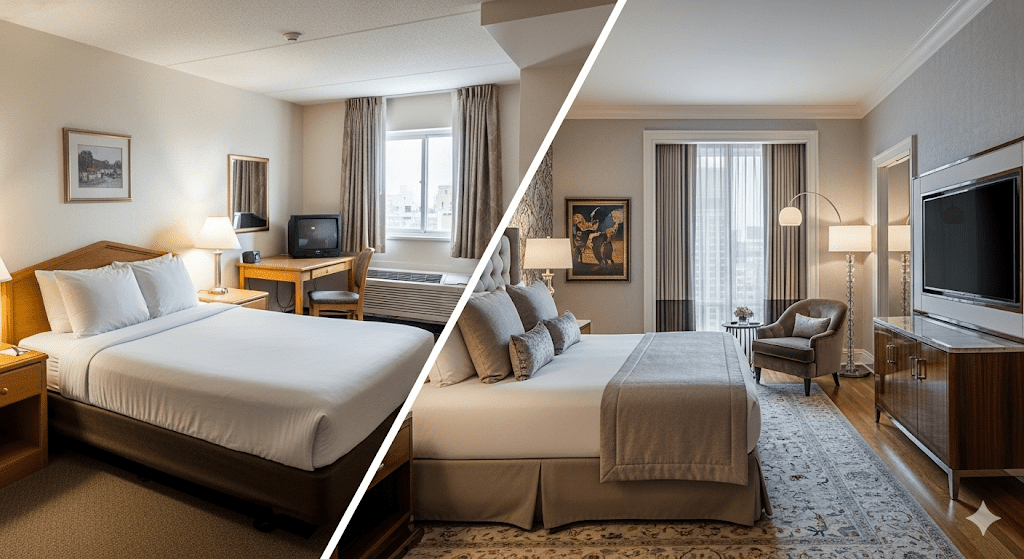
I’ve stayed in everything from budget guesthouses to ultra-luxury 5-star properties over the years. And here’s the truth: star ratings matter, but not always in the way you think.
Last year, I stayed at a 3-star hotel in Jaipur that was spotless, comfortable, and perfectly met my needs for ₹2,500/night. Two months later, I splurged on a 5-star in Mumbai for ₹18,000/night. Both were “good” hotels – but the experiences were worlds apart.
Understanding hotel star ratings helps you make smarter booking decisions. Not every trip needs 5-star luxury. Not every budget allows only 3-star stays. Knowing the differences helps you get maximum value for your money.
This guide breaks down exactly what separates 3-star and 5-star hotels – from room size to service standards, amenities to pricing, and most importantly, when to choose which.
Understanding Hotel Star Ratings
What Do Star Ratings Mean?
Hotel star ratings (1 to 5 stars) indicate the level of facilities, services, and amenities a property offers. Higher stars = more luxury, services, and higher prices.
Rating Bodies in India:
- HRACC (Hotel & Restaurant Approval & Classification Committee)
- Independent rating agencies
- Self-declaration by hotels (common but less reliable)
Important: Star ratings aren’t standardized globally. A 3-star in India might differ from a 3-star in Europe or USA. Always read reviews alongside checking ratings.
The Star Rating Spectrum:
1-Star: Basic, budget, minimal services
2-Star: Clean, simple, few amenities
3-Star: Comfortable, standard services, good value (Our focus)
4-Star: Premium, extensive services, upscale
5-Star: Luxury, exceptional service, top amenities (Our focus)
3-Star Hotels: The Complete Overview
What Defines a 3-Star Hotel?
3-star hotels offer comfortable, clean accommodation with standard amenities and services. They’re the “sweet spot” for most travelers – better than budget but without luxury pricing.
Target Audience:
- Business travelers on moderate budgets
- Families seeking value
- Leisure travelers prioritizing location over luxury
- Backpackers upgrading from hostels
- Budget-conscious tourists
Room Standards in 3-Star Hotels
Size:
- Typically 200-300 sq ft
- Smaller than 5-star but adequate
- Standard double bed or twin beds
- Compact but functional
Furniture & Fixtures:
- Basic but comfortable bed (decent mattress quality)
- Simple wardrobe or closet
- Work desk with chair (in most)
- Side tables
- One or two seating chairs (not always)
- Basic TV unit
- Functional, not fancy
Bathroom:
- Attached bathroom (standard)
- 40-60 sq ft typically
- Shower (usually), bathtub (rare)
- Basic toiletries (soap, shampoo sachets)
- Towels provided
- Hot/cold water
- Clean but simple tiles and fixtures
In-Room Amenities:
- Air conditioning (most properties)
- TV (cable/DTH, basic channels)
- Telephone (intercom)
- Tea/coffee maker (sometimes)
- Mini-fridge (not always)
- Safe (rare)
- Iron/ironing board (on request)
- Bottled water (2 bottles usually)
- WiFi (usually, but speed varies)
Linen & Quality:
- Clean, regularly changed sheets
- Standard cotton linens (not luxury thread count)
- One or two pillows per person
- Basic duvet/blanket
- Clean towels (2-3 per person)
Housekeeping:
- Daily room cleaning
- Towel change daily
- Linen change every 2-3 days or on request
- Turndown service (rare)
Services in 3-Star Hotels
Front Desk:
- 24-hour reception (usually)
- Check-in/check-out assistance
- Basic travel information
- Luggage storage
- Bill payment
- Limited concierge services
Food & Beverage:
- Restaurant (usually one)
- Breakfast included (in many, but basic spread)
- Room service (limited hours, simple menu)
- No 24-hour dining typically
- Bar (not always)
Business Facilities:
- Business center (basic – computer, printer)
- Meeting room (small, 10-20 people)
- Conference facilities (limited)
- WiFi in public areas
Other Services:
- Laundry service (charged extra, takes 24-48 hours)
- Doctor on call (some properties)
- Airport pickup/drop (charged extra, not always available)
- Tour desk (basic assistance)
- Parking (usually free but limited)
What’s Usually NOT Available:
- Concierge service
- Porter/bellboy service
- 24-hour room service
- Multiple restaurants
- Spa/wellness center
- Gym (some have basic gym)
- Swimming pool (very rare in 3-star)
- Valet parking
- In-room dining variety
Typical 3-Star Hotel Pricing
India:
- Metro cities (Mumbai, Delhi, Bengaluru): ₹2,500-5,000/night
- Tier-2 cities (Jaipur, Kochi, Chandigarh): ₹1,500-3,500/night
- Tourist destinations (Goa, Shimla, Manali): ₹2,000-4,000/night
- Small towns: ₹1,000-2,500/night
Pricing factors:
- Location (city center vs suburbs)
- Season (peak vs off-peak)
- Day of week (weekend premium)
- Booking advance
- Package deals (hotel + meals)
5-Star Hotels: The Complete Overview
What Defines a 5-Star Hotel?
5-star hotels represent luxury hospitality – exceptional service, premium amenities, and attention to every detail. They’re designed for guests who expect (and can afford) the best.
Target Audience:
- Luxury travelers
- High-level business executives
- Honeymooners/special occasions
- Celebrities and VIPs
- Guests prioritizing comfort over cost
- Corporate travelers with generous allowances
Room Standards in 5-Star Hotels
Size:
- Minimum 350-500 sq ft (standard rooms)
- Suites: 600-2,000+ sq ft
- Significantly more spacious than 3-star
- Separate areas (sleeping, sitting, work)
Furniture & Fixtures:
- King-size or premium beds (luxury mattresses – brands like Sealy, Tempur-Pedic)
- Multiple seating options (sofa, armchairs, ottoman)
- Large work desk with ergonomic chair
- Walk-in closet or extensive wardrobe space
- Bedside panels for lighting/AC/curtain controls
- Full-length mirror
- Luggage rack
- Elegant, designer furniture
Bathroom:
- 80-150+ sq ft
- Marble or premium tile finishes
- Separate shower and bathtub (deep soaking tubs common)
- Dual sinks (in many)
- Premium fixtures (Kohler, Grohe, etc.)
- Luxury toiletries (international brands – L’Occitane, Molton Brown, etc.)
- Bathrobe and slippers
- Hair dryer (premium quality)
- Magnifying mirror
- Separate toilet area (in suites)
- Rainfall shower, hand shower
- Sometimes: Steam room, jacuzzi
In-Room Amenities:
- Large flat-screen TV (40″+ with premium channels, streaming)
- High-speed WiFi (fast, reliable)
- Nespresso/premium coffee maker
- Mini-bar (stocked with premium items)
- In-room safe (laptop-size)
- Iron and ironing board (always)
- Telephone with multiple lines
- Bluetooth speakers
- USB charging ports throughout
- Smart home controls (in modern properties)
- Premium bottled water (multiple bottles, replenished)
- Fresh flowers
- Welcome amenities (fruit basket, chocolates, welcome drink)
- Newspaper delivery
- Personalized stationery
Linen & Quality:
- Luxury linens (high thread count – 300-1000+)
- Multiple pillow options (pillow menu)
- Down comforters
- Mattress toppers
- Multiple premium towels (bath, hand, face, pool)
- Daily linen change standard
Housekeeping:
- Twice-daily service (morning cleaning + evening turndown)
- Turndown service (bed prepared, lights dimmed, curtains drawn, chocolates on pillow)
- Immediate response to requests
- Attention to detail (items repositioned exactly)
Services in 5-Star Hotels
Front Desk & Concierge:
- 24-hour front desk (multiple staff)
- Dedicated concierge desk
- Services: Restaurant reservations, show bookings, tour arrangements, special requests
- Porter/bellboy service (luggage handling)
- Express check-in/check-out
- VIP check-in (for suites/loyalty members)
- Personalized guest recognition
- Multi-lingual staff
Food & Beverage:
- Multiple restaurants (3-5+ typically)
- Fine dining
- All-day dining (24 hours)
- Specialty cuisines (Italian, Asian, Indian, etc.)
- Cafe/patisserie
- Multiple bars/lounges
- 24-hour room service (extensive menu)
- In-room dining with proper table setup
- Private dining options
- Theme nights and special events
- Breakfast buffet (extensive spread – 50+ items)
Recreation & Wellness:
- Swimming pool (often multiple – indoor/outdoor, kids’ pool)
- Fully-equipped gym (24-hour, latest equipment)
- Spa (full-service with multiple treatment rooms)
- Massages
- Facials
- Body treatments
- Sauna
- Steam room
- Jacuzzi
- Yoga/meditation spaces
- Tennis courts (some properties)
- Golf course access (resort properties)
Business Facilities:
- Business center (fully equipped, 24-hour)
- Multiple meeting rooms (various sizes)
- Ballroom (large events, 500+ capacity)
- Conference facilities (state-of-the-art)
- Secretarial services
- Video conferencing
- High-speed internet throughout
Other Services:
- Valet parking
- Airport pickup/drop (luxury cars, often complimentary for suites)
- Limousine service
- Same-day laundry and dry cleaning
- Shoe shine service
- Doctor on call (24-hour)
- Baby-sitting services
- Pet-friendly facilities (some properties)
- Currency exchange
- Travel desk (comprehensive)
- Shopping arcade
- Salon services
Technology:
- Smart room controls
- In-room tablets
- Mobile app (check-in, room service, requests)
- High-speed WiFi (complimentary)
- Streaming services
- Voice-activated controls (newer properties)
Typical 5-Star Hotel Pricing
India:
- Luxury chains (Taj, ITC, Oberoi, Marriott, Hyatt):
- Metro cities: ₹12,000-35,000/night (standard rooms)
- Metro cities: ₹30,000-1,50,000+/night (suites)
- Tourist destinations: ₹15,000-50,000/night
- Palace hotels (Udaipur, Jaipur): ₹25,000-2,00,000+/night
Pricing factors:
- Brand reputation
- Location (beachfront, city center)
- Room category
- Season
- Special events in city
- Packages included
Direct Comparison: 3-Star vs 5-Star
Room Quality
| Aspect | 3-Star | 5-Star |
| Size | 200-300 sq ft | 350-500+ sq ft |
| Bed | Standard double | King, luxury mattress |
| Bathroom | Basic, shower | Marble, tub + shower |
| Toiletries | Sachets, basic | Premium brands, full-size |
| TV | Small, basic cable | Large, premium channels |
| Seating | Limited | Multiple options |
| Decor | Functional | Designer, luxurious |
| Tech | Basic | Smart controls, latest |
Services
| Service | 3-Star | 5-Star |
| Room Service | Limited hours, basic menu | 24-hour, extensive menu |
| Housekeeping | Once daily | Twice daily + turndown |
| Concierge | Rare/basic | Dedicated desk, full service |
| Porter | Usually not | Always |
| Laundry | 24-48 hours | Same-day available |
| Dining Options | 1 restaurant | Multiple restaurants/bars |
| Breakfast | Basic spread | Extensive buffet (50+ items) |
Amenities
| Amenity | 3-Star | 5-Star |
| Pool | Rare | Standard (often multiple) |
| Gym | Basic/none | Fully equipped, 24-hour |
| Spa | No | Full-service spa |
| Business Center | Basic | Comprehensive |
| Meeting Rooms | Small, limited | Multiple, all sizes |
| Parking | Basic | Valet available |
| WiFi | Yes, variable speed | High-speed, reliable |
Pricing Comparison
For a weekend night in Delhi:
3-Star:
- Room: ₹3,500
- Breakfast: ₹400 (if not included)
- Parking: Free
- Total: ₹3,900
5-Star:
- Room: ₹18,000
- Breakfast: Included (worth ₹1,500)
- Parking: Valet ₹500
- Total: ₹18,500
Difference: ~4.7x more expensive
What you get for extra cost:
- 2x larger room
- Premium bed and linens
- Luxury bathroom
- Multiple dining options
- Pool, gym, spa access
- Superior service
- Brand reputation and reliability
When to Choose 3-Star Hotels
Ideal Situations:
1. Budget-Conscious Travel
- When accommodation is minor part of overall budget
- Spending more time outside hotel
- Prioritizing destination experiences over hotel amenities
2. Short Stays
- One-night stopovers
- Just need clean bed and shower
- Moving between destinations
3. Location Priority
- Central location at affordable price
- Near attractions/transport
- Location matters more than luxury
4. Business Travel (Budget Constraints)
- Company policy restricts hotel budget
- Need basic comfort and WiFi
- Not entertaining clients at hotel
5. Extended Stays
- Week+ stays where daily cost adds up
- Apartment-style 3-star (kitchen access)
- Living like local vs tourist
6. Solo Travel
- Don’t need extra space
- Basic amenities sufficient
- Saving money for experiences
My experience: Stayed 3-star in Jaipur while sightseeing all day. Hotel was just for sleeping. Saved ₹15,000/night, used money for better experiences – cooking class, private guide, shopping.
When to Choose 5-Star Hotels
Ideal Situations:
1. Special Occasions
- Honeymoon
- Anniversary
- Milestone birthday
- Celebration trips
- Create memorable experiences
2. Relaxation-Focused Trips
- Resort vacations
- Spa getaways
- Want to spend time AT hotel
- Pool/beach lounging
- “Staycation” mindset
3. Business Travel (Senior Level)
- Entertaining clients
- Corporate image matters
- Need business facilities
- Expense account allows
4. Family Trips (With Budget)
- Kids’ club facilities
- Multiple pools
- Safe, monitored environment
- Variety of dining options
- Parents’ peace of mind
5. Safety & Reliability
- Unfamiliar destinations
- Solo female travelers wanting security
- First-time international travel
- Brand recognition provides comfort
6. Health/Mobility Considerations
- Elderly travelers (better accessibility)
- Health issues (doctor on call, quality beds)
- Premium comfort needed
7. Convenience Value
- Everything on-site (dining, spa, gym)
- Don’t want to go out for basic needs
- Time-efficient (business travelers)
8. Status/Experience
- Luxury travel lifestyle
- Collecting experiences
- Social media content
- Treating yourself
My experience: 5-star in Maldives for honeymoon. Resort had everything – didn’t need to leave property. Private beach, overwater villa, spa, diving. Worth every rupee for that trip. Wouldn’t have made sense for city sightseeing though.
The 4-Star Middle Ground
Not ready to discuss, but worth mentioning:
4-Star Hotels offer:
- More space than 3-star (300-400 sq ft)
- Better amenities than 3-star
- Some luxury touches (robes, better toiletries)
- Pool and gym (usually)
- Better dining options
- More attentive service
Pricing: ₹5,000-12,000/night (India, major cities)
Best for: When you want upgrade from 3-star but can’t justify 5-star prices. Good middle ground for most travelers.
Money-Saving Tips
Getting 5-Star Experience on Budget:
1. Off-Peak Travel
- Weekdays cheaper than weekends
- Off-season rates (40-60% less)
- Corporate rates (if you have access)
2. Loyalty Programs
- Join hotel chains’ programs (free)
- Accumulate points
- Status benefits (upgrades, late checkout)
3. Package Deals
- Flight + hotel packages
- Longer stays (7+ nights often discounted)
- Special promotions
4. Credit Card Benefits
- Hotel nights (some premium cards)
- Complimentary upgrades
- Discounts and cashback
5. Last-Minute Deals
- Apps like HotelTonight
- Hotels want to fill rooms
- Risky but can save 50%+
6. Negotiation
- Call hotel directly (not always online)
- Ask for best rate
- Mention if returning guest
Getting More from 3-Star:
1. Choose Wisely
- Read recent reviews carefully
- Look at photos (not just official ones)
- Check Google Maps reviews
2. Request Upgrades
- Ask politely at check-in
- Mention special occasion
- Sometimes free, sometimes small fee
3. Utilize What’s Included
- If breakfast included, eat well
- Use WiFi efficiently
- Take advantage of any amenities
4. Location Strategy
- Central 3-star > suburban 5-star
- Walk to attractions (save transport)
Common Myths Debunked
Myth 1: “5-star hotels are always better” Reality: Better ≠ necessary. Depends on your needs. For backpacking trip, 5-star is overkill.
Myth 2: “3-star hotels are dirty/unsafe” Reality: Many 3-star hotels are clean, safe, well-maintained. Read reviews.
Myth 3: “Star ratings are standardized worldwide” Reality: No global standard. 3-star in Switzerland ≠ 3-star in India. Always verify.
Myth 4: “More stars = better location” Reality: Location independent of stars. 3-star in city center > 5-star in suburbs (for sightseeing).
Myth 5: “All 5-stars provide same experience” Reality: Huge variation even within 5-stars. Boutique 5-star ≠ chain 5-star ≠ palace hotel.
Frequently Asked Questions
Generally yes, if you book reputable properties. Check recent reviews on multiple platforms. Look for mentions of safety, cleanliness, neighborhood. 3-star doesn’t mean unsafe – just means fewer amenities.
Usually yes, but verify while booking. Breakfast typically extensive buffet worth ₹1,000-2,000. Some package rates include, some don’t. Always check booking details.
Sometimes! More likely:
Direct bookings (call hotel)
Extended stays
Off-peak seasons
Last-minute (if rooms available)
Group bookings
Online rates usually fixed, but calling can reveal unpublished discounts.
Service quality. Room is nicer, yes. But real difference is attention to detail, personalized service, problem-solving ability of staff. 5-star staff anticipate needs; 3-star staff respond to requests.
4-star is excellent middle ground for most travelers. You get:
Comfortable rooms (bigger than 3-star)
Pool and gym (usually)
Better food options
Improved service
Without paying 5-star prices
For many trips, 4-star is the sweet spot.
Yes, hotels need periodic re-certification (every few years). Properties can gain or lose stars based on upgrades/deterioration. Always check recent reviews – a hotel might have had 5-star rating years ago but declined since.
Rarely, but possible:
Major off-season discounts
Last-minute deals (risky)
Loyalty program redemptions
Error fares (very rare)
Credit card benefits
More realistic: Get 4-star for 3-star price with above strategies.
5-star advantages:
Kids’ club
Better pools
More dining variety
Safer environment
Babysitting services
But: If kids are young and won’t appreciate luxury, and you’re spending days out sightseeing, 3-star might be fine. For resort vacations where you’re at property all day, 5-star worth it for families.
Depends on:
Company policy/budget
Client entertainment needs
Personal preference
Length of stay
Senior executives/client meetings: Often 5-star for image.
Regular business travel: 3-4 star usually sufficient if just need WiFi, desk, comfort.
Reviews more important! Star rating tells you category, reviews tell you reality.
Check:
Google Reviews
TripAdvisor
Booking.com reviews
MakeMyTrip reviews
Look for: Recent reviews (3-6 months), patterns in complaints/praise, verified stays.
A well-reviewed 3-star > poorly reviewed 5-star.
Final Thoughts: Choosing What’s Right for YOU
Here’s what I’ve learned after staying in 100+ hotels across different categories:
The “best” hotel isn’t always the most expensive one. It’s the one that best matches your trip’s purpose.
Going to Ladakh for trekking? That 3-star hotel in Leh is perfect – you’re hiking all day anyway.
Maldives honeymoon? Splurge on the overwater 5-star villa – the hotel IS the experience.
Paris for sightseeing? That clean 3-star in Marais lets you spend money on museums, restaurants, shows instead.
Dubai for business meetings? 5-star downtown property makes sense – client impressions matter.
My personal strategy:
- City sightseeing trips: 3-star, great location
- Beach/resort vacations: 5-star (or high-end 4-star)
- Business travel: 4-star (good balance)
- Special occasions: 5-star, no question
- Road trips/one-night stops: 3-star or even budget
- Weekend getaways: 4-5 star (short trip, maximize comfort)
The real luxury?
Knowing when to splurge and when to save. Understanding that ₹20,000 saved on accommodation can buy:
- Amazing food experiences
- Private tours
- Adventure activities
- Souvenirs and shopping
- An extra few days of travel
Or that ₹20,000 extra spent on perfect honeymoon resort creates lifelong memories.
Make informed decisions. Choose based on your needs, not just ratings.
Both 3-star and 5-star hotels have their place in smart travel planning. Now you know exactly when to choose which.
Happy hotel hunting! 🏨
Quick Decision Guide
Choose 3-Star if: ✓ Budget is priority
✓ Hotel just for sleeping
✓ Exploring city all day
✓ Short stay
✓ Solo traveling
✓ Saving for experiences
Choose 5-Star if: ✓ Special occasion
✓ Resort vacation
✓ Business needs
✓ Family with kids
✓ Want pampering
✓ Hotel is destination
Consider 4-Star if: ✓ Want comfort without splurge
✓ Extended stay
✓ Families on moderate budget
✓ Good balance needed