
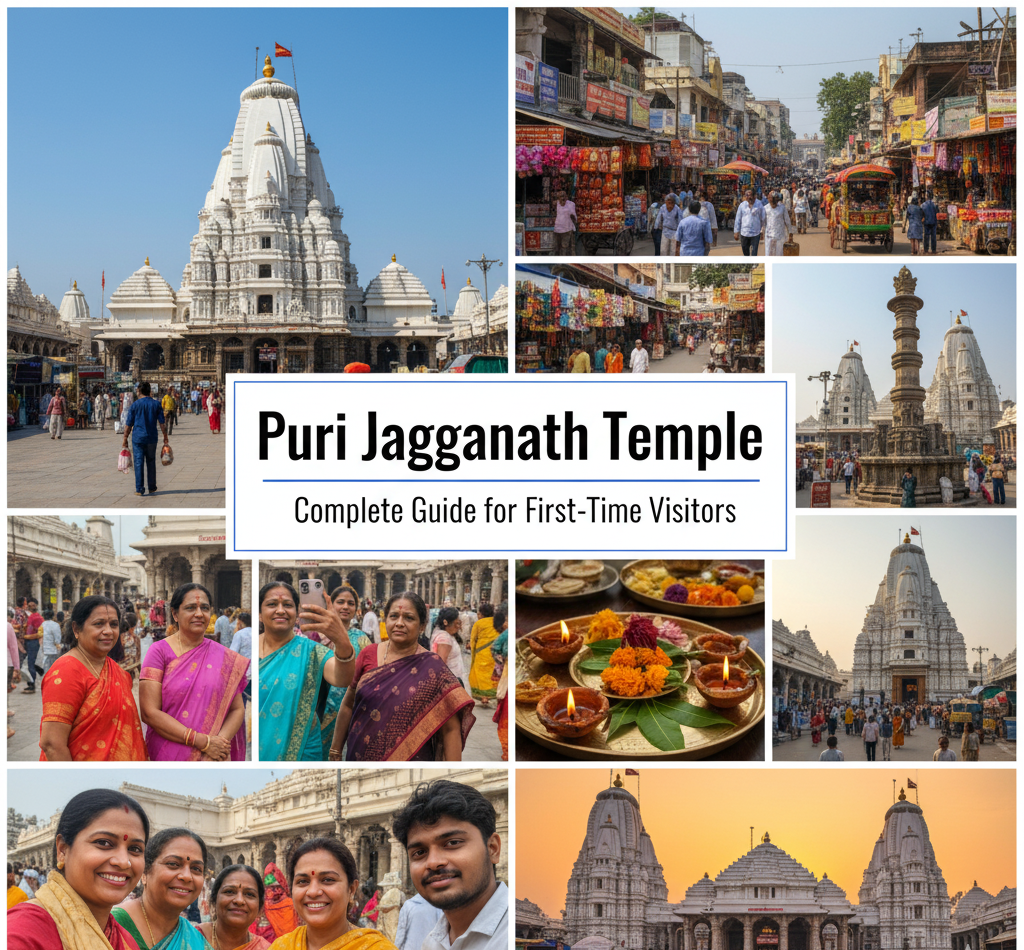
Standing before the towering Jagannath Temple in Puri, watching thousands of devotees moving in waves toward the sanctum, I felt something shift inside me. This wasn’t just another temple visit. This was experiencing faith that has remained unshaken for nearly 900 years.
I’m not an overly religious person, but Puri Jagannath Temple does something to you. Maybe it’s the energy of millions of pilgrims over centuries. Maybe it’s the mystery surrounding the deities whose eyes are disproportionately large, as if seeing into your soul. Maybe it’s witnessing rituals unchanged since the 12th century.
My first visit to Puri was chaotic, overwhelming, and deeply moving. I made mistakes – wrong timings, wrong entrance, didn’t know the rules. But I learned. Over three visits spanning five years, I’ve come to understand this sacred place better.
This guide is everything you need to know before visiting Puri Jagannath Temple – the practical information no one tells you, the spiritual significance everyone should know, and the insider tips that’ll make your pilgrimage smooth and meaningful.
Why Jagannath Temple is Sacred
One of the Four Char Dhams
Puri Jagannath Temple is one of Hinduism’s four holiest sites:
- Badrinath (North)
- Dwarka (West)
- Rameshwaram (South)
- Puri (East)
The Mysterious Deities
Lord Jagannath (form of Krishna), Balabhadra, and Subhadra are unique:
- Incomplete bodies (no clear hands/legs)
- Disproportionately large eyes
- Made of wood (neem tree), not stone
- Replaced every 12-19 years in secret ceremony
- Said to contain Lord Krishna’s heart essence
Legend: The divine architect left deities incomplete when interrupted. Lord Brahma breathed life into them, saying incompleteness represents humans seeking divine completion.
900-Year-Old Unchanged Rituals
- 56 types of daily offerings
- Over 6,000 temple servitors from 36 orders
- Specific rituals at precise times
- Never compromised despite wars or disasters
World-Famous Rath Yatra
Every June-July, millions pull massive chariots carrying the deities 3 km to Gundicha Temple and back. The largest religious chariot procession globally. The English word “Juggernaut” comes from Jagannath.
Mahaprasad – The Blessed Food
Food cooked in the temple becomes Mahaprasad – blessed by the Lord. World’s largest kitchen preparing for 25,000-100,000 people daily using traditional methods.
Temple Timings & Darshan
Daily Schedule
Morning: 5:00 AM – 12:00 Noon
Closed: 12:00 PM – 3:00 PM (deity lunch rituals)
Evening: 3:00 PM – 10:30 PM
Best times (less crowd):
- 6:00-8:00 AM (early morning)
- 8:00-9:30 PM (late evening)
Avoid:
- 9:00 AM-12:00 PM (peak morning)
- 4:00-7:00 PM (peak evening)
- Weekends and festivals
Darshan Options
General (Free): 2-6 hour queue
Special VIP (₹200-300): Separate faster queue, 30 mins-2 hours
Senior Citizens/Disabled: Priority access, free
Important Daily Rituals
- 4:30 AM: Door opening
- 5:00 AM: First worship
- 8:00 AM: Breakfast offering
- 12:00 PM-3:00 PM: Temple closed
- 7:00 PM: Evening dressing
- 8:00 PM: Evening worship
- 10:30 PM: Temple closes
Tip: Visit between rituals, not during. Crowd increases during rituals.
Entry Rules (Strictly Enforced)
Who Can Enter
Hindus only. Security checks carefully. Carry Hindu-name ID proof.
Enforcement is strict. Non-Hindus can visit Puri town and view temple externally.
Dress Code (Mandatory)
Men:
- NO shirts/t-shirts
- Only dhoti or lungi (bare chest)
- Available for rent near temple (₹50-100)
Women:
- Saree or salwar kameez
- NO jeans, shorts, western clothing
- Shoulders and legs covered
Children: Boys bare chest with shorts, girls traditional dress
Items NOT Allowed
- Mobile phones
- Cameras
- Leather items (belts, shoes, bags)
- Electronic devices
- Large bags
- Outside food
- Flowers (temple flowers only)
Cloakroom available: ₹10-20 per item
My mistake: Wore jeans with phone first visit. Had to return to hotel. Lost 2 hours. Don’t do this!
Temple Etiquette
Do:
- Remove footwear
- Follow staff instructions
- Maintain silence
- Move quickly during darshan
- Accept Mahaprasad if offered
Don’t:
- Touch deities
- Take photos
- Push or shove
- Argue with staff
- Smoke near temple
The Darshan Experience
Four Entry Gates
- Singha Dwara (Lion – East): Main entrance, most crowded
- Ashwa Dwara (Horse – South): Less crowded
- Vyaghra Dwara (Tiger – West): Quietest
- Hasti Dwara (Elephant – North): Festival use
Tip: Use Ashwa or Vyaghra gates for less crowd.
Inside the Temple
Architecture:
- 22 steps to platform
- 65-meter high main sanctum
- Neelachakra (blue wheel) on top
- Daily flag change (45-meter climb)
The Darshan
- Organized queue lines
- Climb to inner sanctum
- 5-10 seconds viewing of deities
- Lord Jagannath (black, center)
- Balabhadra (white, left)
- Subhadra (yellow, right)
- Those large eyes will stay with you
My experience: First time felt rushed. But that brief moment stays forever. The eyes…unforgettable.
After Darshan
Mahaprasad: Offered at exit or buy from Ananda Bazaar inside temple (₹50-500).
The Legendary Rath Yatra
When: June-July (dates vary by Hindu calendar)
The Three Chariots
Nandighosa (Jagannath): 45 feet, 16 wheels
Taladhwaja (Balabhadra): 44 feet, 14 wheels
Darpadalan (Subhadra): 43 feet, 12 wheels
The Journey
Day 1: Pull chariots 3 km to Gundicha Temple (2-3 million people)
Day 2-7: Deities stay at Gundicha
Day 9: Return journey
Experiencing It
If going:
- Book accommodation 3-6 months ahead
- Expect massive crowds
- Be prepared for chaos
- Stay hydrated (difficult in crowd)
- Safety first (stampede risk)
Pulling rope: Highly auspicious but difficult to reach due to crowd.
For families/elderly: Watch from designated areas or TV. Crowd is dangerous.
Mahaprasad – Sacred Food
What Makes It Special
Food blessed by Lord Jagannath. Believed to never spoil and carry divine power.
Kitchen: World’s largest, 752 stoves, 600 cooks, operating since 12th century.
What’s Cooked
- Rice varieties
- Dal
- Vegetables
- Sweets (Kheer, Poda Pitha)
- 56 types of offerings daily
Getting Mahaprasad
Inside temple: After darshan or from Ananda Bazaar
Outside: Vendors (authenticity questionable)
Types:
- Sukhila (dry): ₹50-200, lasts longer
- Sankhua (cooked): ₹100-500, fresh
Try: Kheer and Poda Pitha (authentic Odia flavors)
How to Reach Puri
By Air
Bhubaneswar Airport (60 km):
- Taxi: ₹1,200-1,800
- App cab: ₹800-1,200
- 1.5 hours journey
By Train
Puri Railway Station – well connected
From Delhi: 18 hours
From Kolkata: 6-8 hours
From Mumbai: 32 hours
From Chennai: 18 hours
Tip: Book 2-3 months ahead, especially during festivals.
By Road
From Bhubaneswar: 60 km, excellent highway
- Bus: ₹50-100
- Taxi: ₹1,000-1,500
Where to Stay
Budget (₹500-1,500/night)
Near temple: Bhakta Niwas, dharamshalas, basic hotels on VIP Road
Pros: Walking distance
Cons: Basic, noisy
Mid-Range (₹1,500-4,000/night)
VIP Road/CT Road:
- Hotel Sonar Bangla
- Hotel Holiday Resort
- Mayfair Heritage
Pros: Comfortable, decent amenities
Cons: 1-2 km from temple
Premium (₹4,000-10,000/night)
Beach-facing:
- Mayfair Waves
- Hans Coco Palms
- Toshali Sands
Pros: Beach, luxury, pool
Cons: 3-4 km from temple
My Recommendation
Pilgrims: Near temple
Families: Mid-range CT Road
Couples: Beach resorts
Rath Yatra: Book anything 6 months ahead, prices triple.
Best Time to Visit
Weather
October-March: Best (20-30°C, pleasant)
April-June: Hot (35-42°C, humid)
July-September: Monsoon (heavy rains, but Rath Yatra season)
Festivals
- Rath Yatra (June-July): Biggest
- Snana Purnima (June)
- Naba Kalebara (every 12-19 years)
- Diwali, Kartik Purnima
Recommendation: October-February for comfort, or Rath Yatra for devotion.
Beyond Jagannath Temple
In Puri
Gundicha Temple: Where deities stay during Rath Yatra
Narendra Sarovar: Sacred pond
Lokanath Temple: Underground Shiva shrine
Puri Beach: 3 km from temple, sunrise/sunset spot
Day Trips
Konark Sun Temple (35 km): UNESCO site, must-visit
Chilika Lake (50 km): Dolphin watching, bird sanctuary
Raghurajpur (15 km): Craft village, Pattachitra art
Practical Tips
Money & Costs
Darshan: Free (special ₹200-300)
Daily budget:
- Budget: ₹1,000-1,500
- Mid-range: ₹2,500-4,000
- Comfortable: ₹5,000+
What to Pack
Essential:
- Traditional dress
- Extra clothes
- Lock for cloakroom
- Cloth bag for Mahaprasad
- Sunscreen, cap
- Water bottle
- Medicines
Don’t bring:
- Phones (leave at hotel)
- Leather items
- Jewelry
- Large bags
Health & Safety
- Stay hydrated
- Eat at clean places
- Follow crowd instructions
- Don’t swim at beach (dangerous currents)
- Beware touts/thieves
Common Mistakes
- Wrong dress (turned away)
- Carrying phone (can’t enter)
- Peak time visit (long queues)
- No research (waste time)
- Rath Yatra without booking (sold out)
- Midday visit in summer (heat exhaustion)
- Buying outside Mahaprasad (not authentic)
- Swimming at beach (drowning risk)