
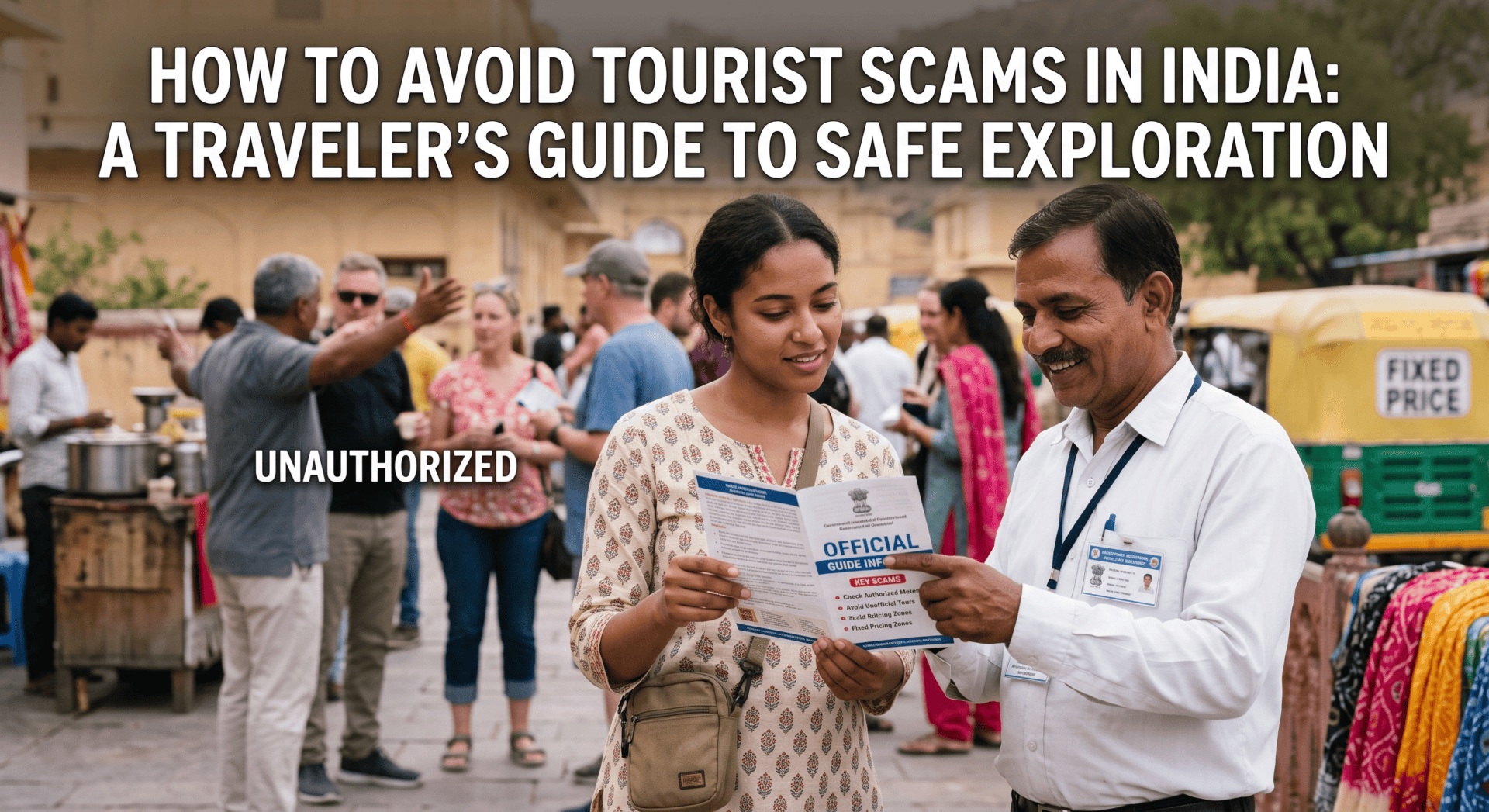

Avoiding tourist scams in India comes down to recognizing a small set of recurring patterns — inflated taxi fares, unsolicited “helpful” strangers, fake tour bookings, and pressure-based shopping tactics — and knowing the standard countermeasures for each. Most scams rely on unfamiliarity and time pressure rather than sophistication, so basic preparation prevents the majority of them.
What Are the Most Common Tourist Scams in India?
The most frequently reported tourist scams in India involve transport, unofficial guides, shopping commissions, and fake documentation or booking services. Taxi and auto-rickshaw drivers sometimes quote inflated fares or claim meters are broken, especially near airports, train stations, and major tourist sites. Unsolicited “guides” or “helpful” strangers often approach new arrivals, offering directions or assistance before steering them toward a specific shop or service that pays them a commission.
Shopping-related scams are another common pattern, particularly around gemstones, carpets, and souvenirs, where inflated prices are presented as fixed or “government-approved.” Fake ticket or hotel booking scams also appear near major train stations, where individuals posing as officials redirect travelers to private tour offices. These patterns are widely documented across consulate advisories and long-running travel forums rather than being rare exceptions.
How Do Taxi and Transport Scams Typically Work?
Transport scams typically involve drivers refusing to use the meter, claiming it’s broken, and instead quoting a fixed fare well above the standard rate, particularly for airport and train station pickups. A related pattern involves drivers or touts claiming a hotel is “closed” or “fully booked” to redirect travelers to a different property that pays them a commission.
The most reliable countermeasure is booking transport through official prepaid taxi counters at airports and stations, or using ride-hailing apps that display fares upfront. Confirming a hotel booking directly with the property, rather than relying on a driver’s claim about availability, avoids the redirection tactic entirely. Agreeing on a fare before starting a journey, or insisting on the meter where legally required, significantly reduces the chance of a fare dispute at the destination.
How Can Travelers Spot Fake Guides or Unofficial Tours?
Unofficial guides typically approach travelers unprompted near major monuments, offering free assistance or informal tours before steering them toward specific shops or asking for a fee partway through. This is a frequently seen pattern at high-traffic heritage sites, where genuine helpfulness and commission-driven approaches can look identical at first.
Licensed guides in India are generally registered with the Ministry of Tourism or a state tourism department and can produce identification on request. Booking a guide in advance through a hotel, official tourism office, or a verified platform is a more reliable approach than accepting an on-the-spot offer. Politely declining unsolicited assistance, even when it seems friendly, is a standard and widely recommended practice rather than a rude one.
What Shopping Scams Should Travelers Watch For?
Shopping-related scams commonly involve inflated pricing presented as fixed, government-approved, or a “special tourist rate,” particularly for gemstones, carpets, pashmina shawls, and souvenirs. A common scenario involves a friendly local or guide recommending a specific shop, which then applies significant markup and sometimes uses high-pressure sales tactics once a traveler is inside.
Comparing prices across multiple shops before purchasing, and treating any claim of a fixed “government rate” with skepticism, are standard precautions. Government emporiums do exist in many cities and generally offer more reliable pricing, though travelers should still compare across a few options rather than assuming any single recommendation is neutral. Avoiding large purchases decided on the spot, especially gemstones marketed as an investment, is a widely recommended practice.
Comparison: Common Scam Types and Countermeasures
| Scam Type | Typical Setup | Recommended Countermeasure |
|---|---|---|
| Taxi/auto fare inflation | Meter “broken,” inflated fixed fare quoted | Use prepaid counters or ride-hailing apps; agree on fare upfront |
| Fake hotel availability | Driver claims booked hotel is “closed” | Confirm directly with the hotel; avoid driver-recommended alternatives |
| Unofficial guides | Unsolicited offer of help near monuments | Book licensed guides in advance; ask for ID |
| Shopping markup/pressure | “Fixed” or “government rate” claims | Compare prices across shops; avoid on-the-spot large purchases |
| Fake ticket/booking counters | Redirect from train stations to private offices | Book only through official counters, IRCTC, or verified platforms |
Is It Safe for Solo or First-Time Travelers to Visit India?
India is generally considered safe for solo and first-time travelers when standard precautions are followed, though scam attempts are more frequently reported around major tourist hubs, transport terminals, and heritage sites than in less-visited areas. Most scams are financial rather than physical in nature, aiming to overcharge or redirect rather than cause harm.
First-time travelers benefit from researching standard fares, entry fees, and booking channels before arrival, since unfamiliarity is the main factor scams rely on. Staying in well-reviewed accommodation, using verified transport options, and maintaining basic skepticism toward unsolicited offers of help are consistently recommended by consulates and experienced travelers alike. Sharing an itinerary with someone at home and keeping digital copies of key documents are additional standard precautions for solo travel anywhere, including India.
Frequently Asked Questions
How do I know if a taxi driver is scamming me in India? A common warning sign is a driver claiming the meter is broken and quoting a high fixed fare instead, especially near airports and stations. Using a prepaid taxi counter or a ride-hailing app with upfront pricing avoids this issue entirely.
Are tour guides in India required to be licensed? Licensed guides are typically registered with the Ministry of Tourism or a state tourism department and can show identification on request. Unsolicited guides who approach travelers directly at monuments are not always licensed, so verifying credentials or booking in advance is recommended.
What should I do if I’ve already paid for something in a scam? Reporting the incident to local police or a tourist helpline is the standard first step, along with disputing the charge with your bank or card provider if payment was made electronically. Keeping receipts and documenting the interaction helps support any dispute.
Is it safe to use street vendors and small shops in India? Most small shops and street vendors are legitimate, and scams are more associated with specific high-pressure tactics than with small businesses generally. Comparing prices and avoiding purchases driven by urgency are reasonable precautions rather than avoiding small vendors altogether.
Are gemstone and carpet scams really common in India? This is a widely documented pattern, particularly in cities with high tourist traffic, where gemstones or carpets are sometimes marketed as investments at inflated prices. Verifying independent pricing and avoiding same-day large purchases are standard precautions.
Do scams happen more in certain Indian cities than others? Scam reports tend to concentrate around major tourist hubs and transport terminals rather than being evenly spread across the country. Researching common patterns for a specific destination before arrival is more useful than assuming risk is uniform nationwide.
Summary
Most tourist scams in India follow a small number of recurring patterns involving transport, unofficial guides, and shopping pressure, rather than being random or unpredictable. Booking through official or verified channels, confirming details independently rather than trusting unsolicited help, and comparing prices before purchasing address the majority of these patterns. Basic preparation before arrival remains the most effective precaution for any destination with high tourist traffic.