
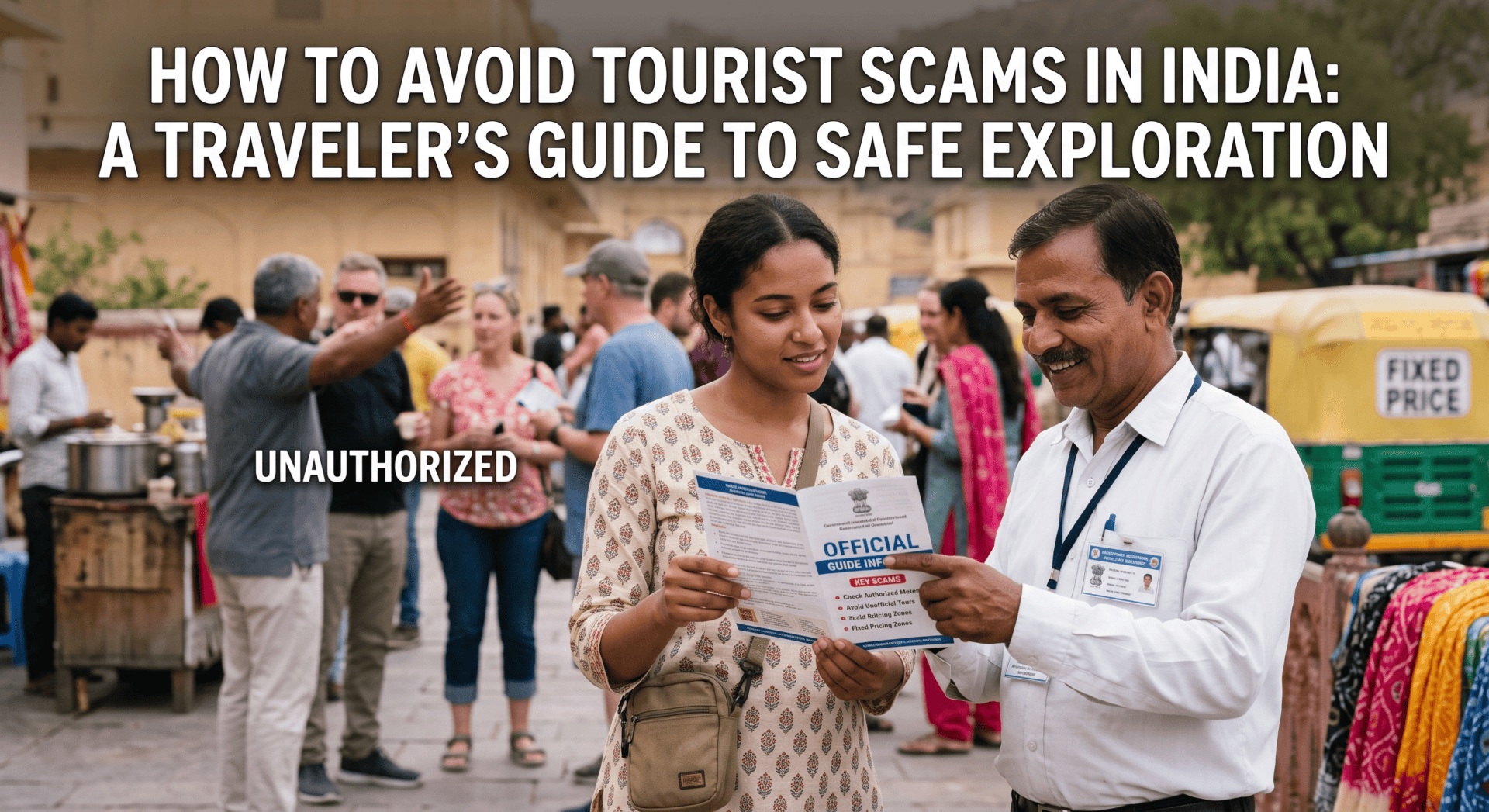
how-to-avoid-tourist-scams-india-complete-guide

How to Avoid Tourist Scams in India – Real Stories & Proven Solutions

The Problem: I Lost ₹8,000 in My First Week in India

Let me tell you about my friend Sarah’s first visit to India. She’s a smart, well-traveled American who’d been to 30+ countries. Within her first week in Delhi, she’d been scammed four times and lost over ₹8,000.

Day 1: Taxi from airport charged her ₹2,500 instead of ₹500
Day 2: “Closed monument” scam led to overpriced shop tour
Day 3: Fake tour operator took ₹3,000 deposit, disappeared
Day 4: Gem scam attempt (she almost fell for it)

She called me crying, feeling stupid and violated. “I’ve traveled everywhere,” she said. “How did this happen?”

Here’s the truth: India has some of the world’s most sophisticated tourist scams. They’re not about your intelligence – they’re about exploiting unfamiliarity with local culture, prices, and tactics.

I’ve lived in India for 30+ years and traveled extensively. I’ve seen (and sometimes experienced) almost every scam in the book. This guide shares real stories and proven solutions to help you avoid what happened to Sarah.

Because the best travel stories shouldn’t include “and then I got scammed.”

Understanding the Scam Landscape in India

Why India Has More Tourist Scams

Not because Indians are dishonest. The vast majority of Indians are honest, helpful, and genuinely kind.

But India has:

  • Huge wealth gap: Your daily budget might equal a month’s income for some
  • Large tourist industry: Millions of visitors = more scam opportunities
  • Cultural confusion: Different norms create exploitation opportunities
  • Limited English in some areas: Communication barriers help scammers
  • Trusting tourists: People come expecting spiritual India, lower their guard

The Psychology Scammers Use

1. Authority: Pretending to be officials, guides, helpful locals
2. Urgency: “Temple closing soon!” “Special price today only!”
3. Social proof: “Many foreigners buy this!” “Your hotel sent me!”
4. Reciprocity: Free help first, then ask for payment
5. Confusion: Overwhelming with information, fast talking

Understanding these tactics is your first defense.

The 15 Most Common Tourist Scams (With Real Solutions)

1. The Airport/Station Taxi Scam

THE PROBLEM:

You land at Delhi/Mumbai/Bangalore airport. Exhausted from your flight, you walk out and immediately multiple “taxi drivers” approach you.

“Taxi sir? Very cheap! ₹500 only to city!”

You agree. He takes you to a random car (not official taxi). Midway, he says “₹500 was per kilometer, not total. You owe ₹3,500.”

You argue. He gets aggressive. You’re alone, in unfamiliar place, with your luggage in his car. You pay.

REAL EXAMPLE:

My friend Jake from Australia. Delhi airport to Paharganj (12 km). Agreed ₹600. Driver took him via “toll road” (fake toll), “traffic shortcut” (longer route), finally demanded ₹2,800. When Jake refused, driver threatened to dump him and luggage on highway. Jake paid.

THE SOLUTION:

Before landing:

  • Download Uber/Ola app
  • Buy local SIM at airport (₹300-500) for app usage
  • Note official prepaid taxi rates (displayed at airport)

At airport:

  • Ignore ALL touts, no matter how convincing
  • Go to official prepaid taxi counter inside airport
  • Pay fixed rate there, get receipt
  • OR use Uber/Ola (tracked, transparent pricing)

If you must use regular taxi:

  • Insist on meter
  • Take photo of taxi number
  • Share ride details with someone
  • Confirm price BEFORE getting in

Red flags:

  • Driver waiting with your name (you didn’t book through hotel)
  • “Meter is broken”
  • “Prepaid counter is closed” (rarely true)
  • Extremely friendly, insistent driver

Cost: Official prepaid ₹400-800, Uber/Ola ₹350-600 (Delhi airport to center). Scam taxis charge ₹1,500-3,500.

2. The “Temple/Monument is Closed” Scam

THE PROBLEM:

You’re heading to Taj Mahal/Red Fort/famous temple. An auto-rickshaw driver or “helpful local” says:

“Oh, today monument closed! Holiday/cleaning/special ceremony. But I take you other beautiful places! Shopping, gem factory, my cousin’s hotel!”

You trust them. They take you to shops where everything is overpriced. They get commission. You waste half a day and money.

REAL EXAMPLE:

Happened to me! Going to Humayun’s Tomb in Delhi. Auto driver insisted it’s closed for “Independence Day preparations” (it was March!). I was young, believed him. He took me to carpet shop, marble inlay shop, spice market. Wasted 3 hours, bought nothing. Later discovered tomb was open all along.

THE SOLUTION:

Before you go:

  • Check official website for monument timings
  • Call tourist helpline to confirm (Google the number)
  • Check recent Google reviews (mentions if closed)

When someone says it’s closed:

  • Smile, say “I’ll check myself, thanks”
  • Walk to monument entrance yourself
  • If genuinely closed, security guards will confirm (not random people)

Trust:

  • Official websites
  • Security guards at the actual gate
  • Recent Google reviews

Don’t trust:

  • Taxi/auto drivers
  • Random “helpful” people
  • Shop owners near monuments

Counter-response: “Thanks, but I called ahead and confirmed it’s open.” (Even if you didn’t – shuts them down.)

3. The Friendly Tour Guide Scam

THE PROBLEM:

A friendly local approaches in tourist area:

“Hello! Where are you from? First time in India? Welcome! I am student, practicing English. Can I show you around? Free, just for practice!”

He seems genuinely nice. Shows you around. Points out interesting things. After 2-3 hours, takes you to shops. Insists you just “look, no pressure.”

Shop owner offers tea. Shows you items. Prices are astronomical. Your “guide” gets 40-50% commission. If you don’t buy, he gets upset: “I spent 3 hours with you! Buy something!”

REAL EXAMPLE:

Sarah (from intro) met “Raj” at India Gate, Delhi. Claimed to be engineering student. Showed her around beautifully – explained history, took photos, very knowledgeable. After 3 hours, took her to textile shop. Pressured into buying silk scarves for ₹6,000 (worth ₹1,500 max). When she hesitated, Raj said “This shop is my family friend, you must buy something after they gave us tea.”

THE SOLUTION:

Understand the pattern:

  • Target: Solo travelers, especially in Delhi, Jaipur, Agra
  • Approach: Friendly, educated, speaks good English
  • Hook: “Practice English” or “Show you real India”
  • Reality: Professional commission agent

What to do:

Polite but firm refusal: “Thank you, but I prefer exploring alone.”

If you engage despite warning:

  • Make it CLEAR upfront: “I won’t buy anything, anywhere.”
  • If they insist on shops, leave immediately
  • Don’t feel guilty – it’s a business, not friendship

Red flags:

  • “I am student” (common line)
  • Targets solo foreigners specifically
  • Very persistent despite initial refusal
  • Always ends at shops

Smart alternative:

  • Hire licensed guide from tourist office (₹1,000-2,000/day)
  • Join walking tour group (₹500-800, reputable companies)
  • Use audio guides at monuments (many available)

4. The Gem/Jewelry Export Scam

THE PROBLEM:

Someone befriends you – taxi driver, hotel staff, “student” guide. Eventually conversation turns to business opportunity:

“You can make big money! Buy gems here (cheap), sell in your country (expensive). I help you export. Many foreigners do this!”

They take you to “gem showroom.” Dealer shows certificates (fake), explains profit margins. You buy ₹50,000-2,00,000 worth of “precious gems.”

You return home. Gems are worth ₹5,000. Certificates are meaningless. They’ve disappeared.

REAL EXAMPLE:

Elderly British couple in Jaipur. Taxi driver befriended them over 3 days. Took them to “family gem business.” Explained export opportunity. They trusted him after 3 days of “friendship.” Bought ₹1,50,000 worth of sapphires. Back in UK, appraiser valued them at ₹8,000. Worse – customs issues on “export.”

THE SOLUTION:

Simple rule: If gem dealing was easy money, everyone would do it.

Red flags:

  • Unsolicited business opportunity
  • “Many foreigners do this”
  • Elaborate certificates (can be faked)
  • Pressure to buy “while you’re here”

What to do:

  • Never, EVER buy gems/jewelry as investment
  • If you want jewelry, buy for personal use only
  • Shop at government emporiums (fixed prices, genuine)
  • If buying expensive items, get independent appraisal BEFORE purchasing

Reality check:

  • Professional gem dealers don’t recruit tourists
  • Export isn’t as simple as they claim
  • Certificates can be forged easily
  • You have zero recourse once you leave India

If you want authentic gems:

  • Tanishq (jewelry chain – verified, fixed prices)
  • Government cottage industry emporiums
  • Established shops with generations of business
  • Get everything appraised independently

5. The Fake Train Ticket Office Scam

THE PROBLEM:

You want to book train tickets. You Google “railway booking office” or ask locals. They direct you to what looks like official office.

Inside: Computers, official-looking staff, railway posters. They book your tickets – charge ₹3,000 for ₹600 ticket. Give you printed ticket (looks real).

At station, your ticket is fake. You miss your train or pay again.

REAL EXAMPLE:

Happened to my friend in Agra. Wanted to book Agra to Jaipur train. Asked hotel reception for railway office. They sent him to nearby “tourist booking center.”

Professional setup – computers, uniformed staff, even railway pamphlets. Booked ticket for ₹2,400 (actual cost ₹540). At Agra station, ticket was fake. Had to buy new ticket last-minute (₹1,800 tatkal).

Total loss: ₹3,660 for ₹540 ticket.

THE SOLUTION:

ONLY use official booking methods:

1. Official website: www.irctc.co.in

  • Create account (free)
  • Book directly
  • Pay actual prices

2. Authorized agents:

  • Look for “IRCTC Authorized Partner” sign
  • Should have license displayed
  • Charge small service fee (₹50-100, not 5x price)

3. Railway station counters:

  • Go to actual station
  • Queue at counter
  • Book directly

What to avoid:

  • Any “tourist booking office” in markets
  • Shops claiming railway affiliation
  • Hotel reception bookings (many take commission)
  • Touts near stations

How to verify:

  • Real tickets have PNR number
  • Check PNR on official IRCTC website immediately
  • If it doesn’t show up = fake ticket

Counter-tactic: “I’ll book online, thanks” – carry laptop/phone to station if needed.

6. The Overcharging Auto-Rickshaw Scam

THE PROBLEM:

Auto-rickshaws (three-wheelers) are convenient but scam-prone.

Scenario 1 – No Meter: “Meter broken. I charge you ₹200.” Real fare should be ₹40.

Scenario 2 – Tampered Meter: Meter runs 3-5x faster than normal. Shows ₹250 for ₹80 ride.

Scenario 3 – Refusal: Refuses short rides, demands minimum fare.

REAL EXAMPLE:

Every Delhi tourist faces this. My cousin from Bangalore (first Delhi visit): Airport metro to CP (Connaught Place). Short ride. Eight autos refused or quoted ₹300-500. Actual meter fare: ₹60.

Finally one agreed, meter “broken,” charged ₹400. She paid (didn’t know better).

THE SOLUTION:

Before getting in auto:

1. Use apps:

  • Uber Auto/Ola Auto
  • Fixed price, tracked route
  • No arguments, cashless payment

2. If using regular auto:

  • “Meter chaloge?” (Will you use meter?)
  • If no = walk away
  • Don’t negotiate – just move to next auto
  • Keep walking till you find meter-using auto

3. Know approximate fares:

  • Google Maps shows distance
  • Auto fare: ₹25 base + ₹12-15/km typically (varies by city)
  • 5km ride = approximately ₹100-120

If driver refuses meter: “Theek hai, koi baat nahi” (Okay, no problem) – walk away.

Usually they call you back with meter agreement.

If meter shows suspiciously high fare: “Meter chalu hai? Dikhao” (Meter is running? Show me)

  • Take photo of meter reading
  • Compare with Google Maps distance
  • Refuse to pay more than reasonable fare
  • Note auto number, complain if needed

City-specific:

  • Delhi: Uber/Ola auto works well
  • Mumbai: Meter mandatory, mostly honest
  • Bangalore: Ola autos reliable
  • Chennai: Pre-pay autos at key spots

Emergency: If driver becomes aggressive, get out at public place, near police, or crowded area. Pay minimum fair amount, walk away.

7. The Charity/Donation Scam

THE PROBLEM:

Someone approaches with official-looking clipboard/booklet:

“We are NGO helping deaf/blind children. Please donate, sir. Small amount only.”

Shows you booklet with “donations” – all foreigners, all ₹1,000-5,000. Pressures you to match or exceed.

Money goes to scammer, not charity.

REAL EXAMPLE:

German tourist in Jaipur. Near City Palace, well-dressed woman approached with laminated card, photos of “school,” donor book. Showed donations of $50-100 from foreigners.

Tourist donated ₹2,000. Later researched – fake NGO. Booklet was prop, signatures were fake.

THE SOLUTION:

Hard truth: 99% of street charity requests in tourist areas are scams.

Legit charities don’t:

  • Approach tourists in streets
  • Show donation booklets with foreigner names
  • Pressure you to donate immediately
  • Accept only cash

What to do:

Polite but firm: “I don’t donate cash on streets. Give me your website, I’ll donate online.”

They’ll make excuses (website down, need cash for emergency, etc.) = scam confirmed.

If you genuinely want to donate:

  • Research registered NGOs
  • Donate through official websites
  • Visit charity offices directly
  • Ask hotel for verified local charities

Red flags:

  • Tourist areas (Taj Mahal, Jaipur markets, Delhi monuments)
  • Laminated certificates (easy to fake)
  • Pressure tactics
  • “All foreigners donate”
  • Cash only

The booklet trick: All signatures are fake. They create donor history to pressure you through social proof.

8. The Photo Scam

THE PROBLEM:

You’re at tourist spot. Friendly local/dressed-up character:

“Sir, photo with monkey/snake/costume/instrument? Free photo, welcome to India!”

You pose. Take photo on YOUR phone.

After photo: “₹500 please.” “But you said free!” “Photo was free. Monkey/costume rental is ₹500.”

Aggressive demand. Crowd gathers. You feel embarrassed, pay.

REAL EXAMPLE:

Japanese couple at Gateway of India, Mumbai. Local in traditional Maharashtrian dress offered photo. Wife posed. Husband took photo on their camera.

Immediately: “₹1,000 for costume and photo.” They refused. Man got loud, aggressive. Crowd stared. Couple felt embarrassed, paid ₹500 to leave quickly.

THE SOLUTION:

Simple rule: There are no free photos with props/animals/costumed people.

Before agreeing: “How much?”

If they say free: “No really, how much for photo?”

If they insist free: “I prefer not to, thank you.”

If caught in scam:

  • Stay calm, don’t shout
  • “I’m not paying. You said free.”
  • Start walking away
  • Ignore theatrics

They rely on:

  • Your embarrassment
  • Fear of scene
  • Not knowing rights

Reality:

  • You owe nothing if you clarified beforehand
  • Verbal contract about “free” photo
  • They can’t force payment

Alternative: If you want such photos, negotiate price FIRST. Usually ₹50-100 is reasonable.

Avoid entirely:

  • Photos with animals (often mistreated)
  • “Free” offers (rarely free)
  • Costumed people in tourist zones

9. The SIM Card Data Scam

THE PROBLEM:

You buy tourist SIM card. Shopkeeper activates it, helps set up. Later you realize:

  • International roaming enabled (expensive)
  • Premium services subscribed (daily charges)
  • Data pack not activated (paying per MB)

Your ₹500 SIM card bill becomes ₹3,000.

REAL EXAMPLE:

Canadian friend bought Airtel SIM in Delhi. Shopkeeper “helped” activate. After 3 days, balance was zero despite ₹1,000 recharge.

Discovered: International roaming active (₹500/day), daily horoscope service (₹50/day), data not from pack but pay-per-use (₹250/day).

Total loss: ₹2,250 unnecessary charges in 3 days.

THE SOLUTION:

Buy SIM only from:

  • Airtel/Vodafone/Jio official stores (not small shops)
  • Airport counters (slightly expensive but reliable)
  • Prepaid SIM cards with TOURIST plans clearly marked

When buying:

  • Ask for itemized plan details in writing
  • Confirm: Data amount, validity, roaming status
  • Check first bill/recharge immediately
  • Disable international roaming: *141# for Airtel

Verify activation:

  • Check balance: *123# (Airtel), *199# (Vodafone)
  • Check data balance in settings
  • Make test call to confirm it works

If overcharged:

  • Visit official store (not vendor)
  • Show bills, demand refund
  • Tweet at company (@Airtel_Presence) – public complaints work
  • Consumer forum if significant amount

Safe option: Buy SIM at airport – costs ₹200-300 more but verified, working, no scam risk.

10. The Restaurant Bill Padding Scam

THE PROBLEM:

You eat at restaurant. Bill arrives. Charges don’t match menu:

  • Items you didn’t order
  • Wrong quantities
  • Service charge + GST + random fees
  • Bottles counted wrong (ordered 2, charged 4)

REAL EXAMPLE:

Group dinner in Bangalore. 5 people, ordered 5 dishes, 3 drinks. Bill showed 8 dishes, 7 drinks, service charge, special tax.

Total: ₹4,500. Should have been ₹2,200.

When questioned, waiter got defensive. Manager came, reluctantly corrected some items. Final bill: ₹3,800 (still padded but they were tired of arguing).

THE SOLUTION:

When ordering:

  • Ask for menu with prices
  • Note down what you order
  • Confirm prices for “special” items not on menu
  • Ask about service charges upfront

When bill comes:

  • Match bill with your notes item by item
  • Check quantities carefully
  • Question EVERY discrepancy
  • Don’t feel embarrassed to verify

Common padding tricks:

  • Extra quantities (ordered 2, charged 3)
  • Items you didn’t order (they remove when questioned)
  • Higher prices than menu (claim menu is old)
  • Mandatory service charge (10-15% often not mandatory)
  • Cover charge/plate charge (should be mentioned upfront)

If overcharged: “This is wrong. I ordered X, you’ve charged for Y.”

Be firm. Ask to see manager. Refuse to pay incorrect amount.

They rely on:

  • You not checking
  • Embarrassment about questioning
  • Group pressure (friends saying “just pay and leave”)

Stand your ground:

  • You have right to correct bill
  • It’s not rude to verify
  • Better to spend 5 mins verifying than lose ₹500+

Prevention:

  • Eat at established restaurants (less likely to scam)
  • Check Google reviews for “bill padding” complaints
  • Use credit card (easier to dispute if needed)

11. The Money Changer Scam

THE PROBLEM:

You exchange foreign currency. Money changer:

  • Slight of hand: Counts money quickly, palms some notes
  • Distraction: While counting, asks question, recounts “because you distracted”
  • Confusion: Mixes denominations, gives you ₹500 notes instead of ₹1,000
  • Fake notes: Slips in counterfeit bills

REAL EXAMPLE:

Australian couple at Paharganj, Delhi. Changed $500. Guy counted money super fast – ₹42,000.

Back at hotel, recounted: Only ₹35,000. Lost ₹7,000 in sleight of hand.

THE SOLUTION:

Only change money at:

  • Banks (safest, official rates)
  • Authorized money changers (license displayed)
  • ATMs (get local currency directly)

Avoid:

  • Street money changers
  • “Special rate” offers
  • Hotel receptions (poor rates)
  • Shops offering currency exchange

When exchanging:

  • COUNT MONEY YOURSELF, slowly, in front of them
  • Don’t let them rush you
  • Separate denominations
  • Check for fake notes (feel texture, watermark)
  • Count twice before leaving
  • Get receipt

If they rush you: “I’ll count at my pace, please wait.”

If there’s error:

  • Count again right there
  • Don’t leave till satisfied
  • If clearly cheated, threaten police (often resolves it)

Best practice: Use ATM. Get cash directly. Rates are usually better than money changers anyway. Slight ATM fee is worth avoiding scam risk.

12. The Fake Police/Official Scam

THE PROBLEM:

Someone in uniform/official-looking clothes stops you:

“I am police/tourist officer. Your passport please. You have problem with visa/drugs/rules. Come to office.”

They take you to “office” (random building), demand fine/bribe. Threaten with jail, deportation.

REAL EXAMPLE:

Rare but scary. Israeli backpacker in Goa. Two men in police-like uniforms stopped him, claimed they found marijuana nearby, needed to check his bag.

Found nothing, but said “You were in area of drug activity, must come to station.”

Scared, he negotiated. They demanded ₹15,000 “fine.” He paid ₹8,000 to avoid “going to station.”

Later realized: Fake police. Real police wear proper uniforms, have ID cards, work from actual police stations.

THE SOLUTION:

Know your rights:

  • Real police will have ID cards
  • Real police work from actual police stations
  • Tourist police have specific uniforms/badges
  • Police cannot demand instant fines (must go through legal process)

If stopped by “police”:

  • Ask to see ID card (photo ID, badge number)
  • Ask for station house and superior’s name
  • Insist on going to actual police station (not random office)
  • Call tourist helpline: 1363 (government tourist helpline)
  • Call your embassy if serious

Red flags:

  • Plainclothes “police” in tourist areas
  • Demand instant payment
  • Threaten you with jail/deportation immediately
  • Refuse to go to official police station
  • Can’t produce proper ID

If threatened:

  • Stay calm
  • “I will call my embassy now”
  • Start calling tourist helpline (1363)
  • Most will disappear at this point

Real vs fake:

  • Real police are usually professional
  • Real police follow process
  • Real police don’t demand cash on spot
  • Fake police pressure for immediate payment

Tourist police: Many Indian cities have tourist police specifically for helping tourists. They wear distinct uniforms. Approach them if you face issues.

13. The Deliberate Item Damage Scam

THE PROBLEM:

You’re browsing shop. Shopkeeper accidentally-on-purpose knocks expensive item near you.

“You broke it! This was ₹25,000 piece. You must pay!”

You didn’t touch it. They insist you pay.

REAL EXAMPLE:

French tourist in Jaipur antique shop. While showing items, shopkeeper “accidentally” knocked marble statue. Blamed tourist for being “too close.”

Demanded ₹30,000. Tourist refused. Shopkeeper got aggressive, blocked door, threatened police.

Tourist panicked, paid ₹12,000 to leave.

THE SOLUTION:

In shops:

  • Don’t touch unless necessary
  • Keep hands visible
  • Stay back from fragile items
  • If shopping alone, be extra cautious

If accused:

  • “I didn’t touch it. I’m not paying.”
  • Walk towards door
  • If they block: “Let me leave or I call police.”
  • Actually call police (112)
  • Most will back down

They rely on:

  • Your guilt/fear
  • Being alone
  • Not knowing rights

Reality:

  • They can’t force you to pay
  • They can’t physically stop you
  • Actual police won’t support their scam

Prevention:

  • Shop with companion
  • Video shops (subtle phone recording)
  • Stick to reputable shops

If trapped:

  • Call friend/hotel/tourist helpline
  • Stay near shop entrance
  • Be loud – “I’m being harassed”
  • Leave immediately

Shopkeepers want quiet customers. Making noise and involving authorities usually ends it.

14. The Medicine/Drug Scam

THE PROBLEM:

You feel sick. Someone recommends “Ayurvedic doctor” or pharmacy.

Doctor/pharmacist:

  • Diagnoses serious illness (even without examination)
  • Prescribes expensive “special medicine”
  • Must be bought from their shop only
  • Charges ₹5,000-15,000

Medicine is basic/fake/unnecessary.

REAL EXAMPLE:

American student had mild stomach ache in Varanasi. Hotel suggested “good Ayurvedic doctor.”

Doctor examined briefly, said “serious parasite infection, needs special treatment.”

Prescribed medicines: ₹12,000. Must start immediately, buy from his shop.

Scared, she bought it. Back home, real doctor said it was just basic indigestion, medicines were generic supplements worth ₹500.

THE SOLUTION:

For medical needs:

  • Use established hospitals/clinics
  • Apollo, Fortis, Max (major chains)
  • Search Google Maps for hospital ratings
  • Contact your embassy for recommended doctors

Avoid:

  • Hotel-recommended doctors (commission)
  • “Special Ayurvedic doctors” in tourist areas
  • Doctors attached to pharmacies
  • Anyone diagnosing serious illness immediately

If genuinely sick:

  • Go to hospital, not clinic
  • Get written diagnosis
  • Get second opinion
  • Buy medicine from outside pharmacy (compare prices)
  • Search medicine names online (check if it exists)

Red flags:

  • Immediate serious diagnosis
  • Must buy from their pharmacy only
  • Expensive “special” medicines
  • Doctor seems to know you’re tourist
  • No proper examination

For minor issues:

  • Regular pharmacy is fine
  • Ask for generic versions (cheaper)
  • Check medicine packaging (licensed manufacturer)

15. The Hotel Booking Scam

THE PROBLEM:

You book hotel online. Arrive at property:

Scenario 1: “We’re overbooked. But my friend has better hotel nearby. I’ll take you, same price.”

Their “friend’s hotel” is worse, charges more.

Scenario 2: Room is terrible (nothing like photos). Want to leave. They refuse refund. Already charged you.

REAL EXAMPLE:

Korean couple booked heritage hotel in Udaipur. Photos showed lake view, beautiful rooms. Paid ₹8,000 advance.

Arrived: Room was dark, small, no lake view, dirty bathroom. Complained. Manager said “Lake view rooms are ₹15,000. You booked standard.”

Booking clearly said “Lake View Room.” Manager refused to show confirmation, refused refund.

Had to stay in terrible room or lose ₹8,000.

THE SOLUTION:

When booking:

  • Use established platforms (Booking.com, Agoda, MakeMyTrip)
  • Read recent reviews (1-3 months old)
  • Screenshot your booking confirmation
  • Note cancellation policy
  • Check exact room type booked

Upon arrival:

  • Show booking confirmation immediately
  • Insist on seeing booked room category
  • Check room BEFORE agreeing
  • If not as booked: “This is not what I paid for”

If they claim overbooking:

  • “My booking is confirmed. Show me my room or refund immediately.”
  • Contact booking platform immediately
  • Don’t agree to “alternative” without seeing it
  • Document everything (photos, videos)

If room is not as advertised:

  • Take photos/videos
  • Refuse to stay
  • Demand refund
  • Leave review on platform (hotels care about reviews)
  • Escalate to booking platform

Platform protection:

  • Booking.com has guest protection
  • If hotel doesn’t honor booking, platform can force refund
  • Contact platform customer service immediately

Prevention:

  • Book refundable rates when possible
  • Pay through platform (not directly to hotel)
  • Read ALL reviews, not just top ones
  • Be suspicious of only 5-star reviews

General Scam Prevention Strategies

Before Your Trip

1. Research common scams in cities you’re visiting

  • Google “[city name] tourist scams”
  • Read travel forums (Reddit r/India, TripAdvisor forums)
  • Watch YouTube videos about scams

2. Know approximate prices

  • Taxi fares (Google Maps + fare calculator)
  • Restaurant meal costs (₹300-800 normal meal)
  • Attraction entry fees (check official websites)
  • Auto-rickshaw rates

3. Download essential apps

  • Uber/Ola
  • Google Maps
  • WhatsApp (for emergency contacts)
  • Currency converter
  • Your hotel’s app (if they have one)

4. Prepare emergency contacts

  • Tourist helpline: 1363
  • Police: 112
  • Your embassy number
  • Hotel phone number
  • Travel insurance emergency number

During Your Trip

1. Trust your instincts

  • If it feels wrong, it probably is
  • Deals that seem too good ARE too good
  • Overly friendly strangers usually have agenda

2. Take your time

  • Scammers rush you
  • You have right to think
  • Sleep on big decisions
  • “I’ll think about it and let you know”

3. Use official services

  • Licensed guides
  • Prepaid taxis
  • Government emporiums
  • Established restaurants

4. Be aware but not paranoid

  • Most Indians are helpful, honest
  • Ask hotel staff for recommendations
  • Families, elderly locals are usually trustworthy
  • Women with children are safe to ask directions

5. Document everything

  • Screenshots of bookings
  • Photos of hotel rooms
  • Receipts from every purchase
  • License plates of taxis
  • Names of people you deal with

Recovering from a Scam

If you realize you’ve been scammed:

1. Don’t panic

  • It happens to experienced travelers
  • It’s not about your intelligence
  • Learn and move on

2. Report it

  • File police complaint (for major scams)
  • Report to tourist office
  • Leave reviews warning others
  • Report to your embassy (for serious cases)

3. Recover what you can

  • Credit card disputes (if paid by card)
  • Travel insurance claims
  • Platform refunds (Booking.com, etc.)
  • Small claims in severe cases

4. Help others

  • Share your story online
  • Update TripAdvisor reviews
  • Warn fellow travelers

City-Specific Scam Hotspots

Delhi

Most common:

  • Airport taxi scams
  • “Monument closed” scams at Red Fort, Qutub Minar
  • Paharganj area scams (fake tickets, money changers)
  • Connaught Place “friendly” guides

Safe areas:

  • South Delhi (relatively less scams)
  • Government emporiums (Dilli Haat)
  • Prepaid services

Agra

Most common:

  • Fake Taj Mahal tickets
  • Marble shop commission scams
  • “Today is holiday” scams
  • Overpriced guides

Safety:

  • Buy Taj tickets at official counter or online
  • Avoid touts completely

Jaipur

Most common:

  • Gem scams (biggest hotspot)
  • Block printing/textile shops
  • Fake palace tours
  • Auto-rickshaw overcharging

Safety:

  • Government emporiums only
  • Pre-book official guides

Goa

Most common:

  • Water sports pricing scams
  • Fake police (rare but scary)
  • Taxi cartels (refuse meter)
  • Drug dealer traps

Safety:

  • Negotiate water sports prices upfront
  • Use official taxi stands
  • Never buy drugs

Mumbai

Most common:

  • Taxi refusal for short distances
  • Overcharging auto-rickshaws
  • Colaba/Gateway tourist scams

Safety:

  • Mumbai is generally safer
  • Taxis mostly honest (use meter)
  • Stick to established areas


Visited 6 times, 7 visit(s) today