
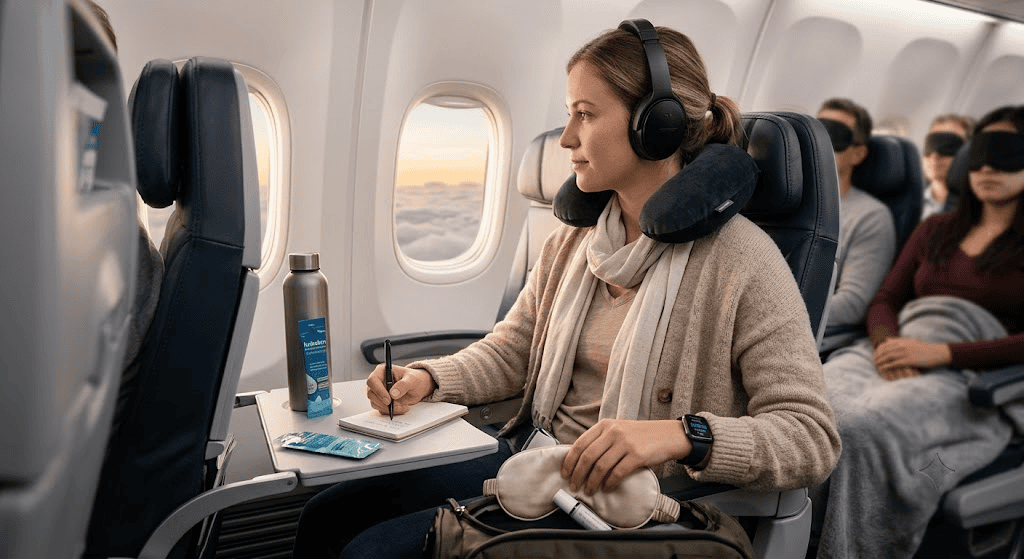

Jet lag is the tiredness, disorientation, and disrupted sleep that happens when your internal body clock is out of sync with the time zone you’ve landed in. It occurs because your circadian rhythm — the internal 24-hour clock that controls sleep, hunger, and alertness — takes time to reset after crossing multiple time zones quickly. The more time zones you cross, the stronger the effect, and eastward travel is generally harder on the body than westward travel.
The good news: jet lag isn’t something you just have to endure. With the right preparation before you fly, smart choices during the flight, and a few adjustments after you land, most travelers can cut recovery time significantly — sometimes from several days down to one or two.
This guide breaks the process into three stages: what to do before you fly, what to do during the flight, and what to do once you land.
Why Jet Lag Happens
Your body clock is regulated mainly by light exposure. When you fly across time zones faster than your body can naturally adjust (roughly one time zone per day), your internal clock stays set to your departure city while the sun outside says otherwise. This mismatch causes the classic symptoms: fatigue, trouble sleeping at night, waking up too early, poor concentration, irritability, and sometimes digestive issues.
Common jet lag symptoms include:
- Difficulty falling or staying asleep at your destination’s bedtime
- Daytime sleepiness and low energy
- Trouble concentrating or making decisions
- Headaches or general malaise
- Mild digestive upset
- Mood changes, including irritability
Crossing five or more time zones typically produces noticeable jet lag. Flights within two to three time zones usually cause milder effects, sometimes described as general travel fatigue rather than true jet lag.
Before You Fly: Prepare Your Body Clock
1. Shift your sleep schedule gradually
Starting two to three days before departure, shift your bedtime and wake time by 30–60 minutes per day in the direction of your destination’s time zone. If you’re traveling east, go to bed and wake up earlier. If you’re traveling west, do the opposite. This gives your circadian rhythm a head start instead of forcing an abrupt reset on arrival.
2. Manage your light exposure in advance
Light is the strongest signal your brain uses to set its internal clock. In the days before an eastward flight, get bright light exposure earlier in the day and avoid screens late at night. Before a westward flight, seek out light later in the evening. Apps that calculate personalized light-exposure schedules based on your flight itinerary can make this easier if you don’t want to do the math yourself.
3. Book flight times strategically when you can
If your budget and route allow it, an overnight flight that lands in the morning at your destination often makes adjustment easier, since it lines up with a natural sleep window. This isn’t always possible, but it’s worth checking when comparing flight options.
4. Start hydrating early
Cabin air is significantly drier than what your body is used to, and dehydration makes jet lag symptoms worse — particularly headaches and fatigue. Begin increasing your water intake the day before you fly rather than waiting until you’re in the air.
During the Flight: Protect Your Sleep and Hydration
5. Set your watch to destination time immediately
As soon as you board, switch your mindset (and your watch) to your destination’s time zone. Try to eat and sleep according to that schedule rather than your home time, even if it feels unnatural at first.
6. Prioritize sleep over entertainment
It’s tempting to use a long flight to catch up on movies, but sleeping during the portion of the flight that aligns with nighttime at your destination will help far more with recovery than a few extra films. Eye masks, neck pillows, and noise-canceling headphones or earplugs can make this meaningfully easier.
7. Limit caffeine and alcohol
Both interfere with sleep quality and worsen dehydration. Caffeine can also delay your body’s ability to fall asleep on the new schedule, and alcohol — despite feeling sedating — actually fragments sleep and leaves you more dehydrated at altitude. Water, herbal tea, or plain juice are better choices for most of the flight.
8. Move regularly
Sitting for long stretches restricts circulation and adds to overall travel fatigue, which compounds jet lag symptoms. Standing, walking the aisle, and doing simple seated stretches every couple of hours helps you feel more functional on arrival.
9. Consider a short-acting sleep aid only if you already know how it affects you
Some travelers use melatonin or a doctor-approved sleep aid to help fall asleep on a new schedule during the flight or on the first night at the destination. This isn’t right for everyone, and if you haven’t used a sleep aid before, a long-haul flight is not the time to try one for the first time. Check with a doctor or pharmacist if you’re considering this option, especially if you take other medication.
After You Arrive: Reset Your Clock Fast
10. Get outside as soon as possible
Natural light exposure after landing is one of the most effective ways to reset your circadian rhythm. If you’ve traveled east, get morning light. If you’ve traveled west, prioritize afternoon and evening light instead. Even 20–30 minutes outdoors can help.
11. Resist the urge to nap for too long
A short nap of 20–30 minutes can help if you’re genuinely struggling to function, but a long nap in the middle of the day will delay your adjustment to the new time zone. Set an alarm if you do nap.
12. Stick to local mealtimes
Eating on your destination’s schedule, even if you’re not especially hungry, reinforces the new routine and helps reset your internal clock alongside light exposure.
13. Push through to local bedtime
The single most effective thing you can do on your first day is stay awake until it’s an appropriate bedtime locally, even if you’re exhausted. Going to sleep too early usually means waking up at 3 a.m. and struggling for several more days.
14. Keep hydrating and go easy on alcohol
Rehydrating after landing supports faster recovery from travel fatigue generally. It’s tempting to celebrate arrival with a drink, but alcohol on top of jet lag will make sleep less restorative on your first night.
Quick Reference: Jet Lag Recovery Timeline
| Time Zones Crossed | Typical Symptoms | Estimated Recovery |
|---|---|---|
| 1–2 | Mild fatigue | Usually resolves within a day |
| 3–5 | Noticeable sleep disruption, low energy | 2–3 days |
| 6–8 | Significant fatigue, poor concentration | 3–5 days |
| 9+ | Strong jet lag, appetite and mood changes | 5–7 days or more |
As a general rule of thumb, the body adjusts by roughly one time zone per day, though light exposure, sleep quality, and individual differences can speed this up or slow it down.
Eastward vs. Westward Travel: Why One Feels Worse
Most travelers find eastward flights (for example, flying from the US to Europe, or from Europe to India) harder to recover from than westward flights. This is because eastward travel requires your body to shorten its day and fall asleep earlier than it naturally wants to, which goes against the body’s tendency to run on a slightly longer-than-24-hour cycle. Westward travel, which requires staying up later, tends to feel more manageable for most people.
Frequently Asked Questions
How many days before a flight should I start adjusting my schedule? Two to three days before departure is generally enough for most trips. For very long trips across many time zones, some travelers start adjusting up to a week in advance.
Does jet lag get worse with age? Many travelers report that recovery takes longer as they get older, though individual experiences vary. Staying well-rested and hydrated before the trip helps regardless of age.
Is jet lag the same as travel fatigue? No. Travel fatigue comes from the physical stress of traveling itself — sitting for long periods, disrupted routines, and dehydration — and can happen even without crossing time zones. Jet lag specifically refers to the circadian rhythm mismatch caused by crossing multiple time zones.
Can melatonin help with jet lag? Melatonin is commonly used to help shift sleep timing, but timing and dosage matter, and it doesn’t work the same way for everyone. It’s worth discussing with a doctor before your trip rather than experimenting for the first time while traveling.
Does the direction of travel really make a difference? Yes. Most research and traveler experience suggests eastward travel is harder to adjust to than westward travel, because it requires falling asleep earlier than your body’s natural rhythm prefers.
The Bottom Line
Jet lag can’t be eliminated entirely on most long-haul routes, but it can be significantly reduced with a bit of planning. Shift your schedule before you fly, protect your sleep and hydration during the flight, and use light exposure strategically once you land. Small, consistent choices at each stage make a much bigger difference than trying to fix everything after you’ve already landed exhausted.
Planning a long-haul trip? Check out our guides on budget international flights and avoiding common travel scams to round out your trip planning.